
Not all patients who have been diagnosed with hip osteoarthritis can or must immediately resort to prosthetic replacement surgery. Depending on the degree of arthrosis, it is possible to address the degenerative process thanks to modern techniques Regenerative Medicine for the hip.
Osteoarthritis of the hip (coxarthrosis) is a degenerative disease that affects the articular cartilage, the smooth tissue that lines the ends of bones within a joint, allowing them to slide without friction. Over time, the cartilage wears away, causing friction between the bones, pain, stiffness and limitation of movement. Factors such as age, previous trauma, structural defects and excessive load on the joint can contribute to the development of osteoarthritis.
In the field of Orthopedics, and in particular in the management of hip pathologies, we are witnessing a real revolution. Traditionally, solutions for advanced osteoarthritis have focused on joint replacement by prosthesis. While anterior approach hip replacement represents the best and only truly minimally invasive solution, it is essential to explore all possible avenues to preserve the joint, especially in the initial stages of the disease.
La Regenerative Medicine, as the name suggests, has the purpose of regenerate tissues degenerated by the arthritic process, through the infiltration of substances with power precisely regenerative, anti-inflammatory and pain relievingThese techniques are particularly indicated in the early stages of hip arthrosis, or in particular types of patients.
We currently have various methods that can be used in all those patients who have symptoms affecting the hip joint that do not require surgical treatment. In fact, we are talking about infiltrative therapy with hyaluronic acid or PRP, ozone therapy, e lipofilling from adipose tissue.
Regenerative Medicine for the hip: what are the infiltrative techniques used?
Regenerative Medicine in hip arthrosis has many facets. Infiltrative techniques can be divided into two large branches.
A first infiltrative technique involves the use of anti-inflammatories per for patients who cannot undergo surgery, such as elderly patients with respiratory and/or cardiac problems. In these patients, the use of therapies with cortisone (which does not fall within Regenerative Medicine) or l’ozonoterapia It helps to relieve pain and benefit from an anti-inflammatory effect.
A second infiltrative technique instead involves the use of platelet-rich plasma (PRP) or of the mesenchymal cells. Both of these substances have a strong anti-inflammatory and regenerative power: they are substances obtained from autologous samples from the patient, and therefore without any possibility of rejection or contraindications to the treatment. This second technique is indicated for:
- Young patientsYoung patients in the early stages of hip osteoarthritis, which can still avoid surgery;
- Patients characterized by congenital hip pathologies;
- Sports patients in which arthrosis is favored by dynamics of overuse, or overloading of the joint.
Regenerative Medicine aims to do just that: stimulate the body's natural healing mechanisms to repair damaged tissue, reduce inflammation and relieve pain. The goal is improve hip function e slow the progression of cartilage damage.
Il Dr. Riccardo Giacomi, Orthopedic surgeon with thirty years of experience in the management of hip osteoarthritis, uses various Regenerative Medicine techniques:
- Platelet Rich Plasma (PRP) Infiltrations
- Mesenchymal cells (lipofilling)
- Hyaluronic acid injections
- Ozone therapy
PRP Infiltrations for Hip Osteoarthritis
Among the most studied and applied regenerative therapies, the PRP for the hip (i.e. Platelet Rich Plasma) plays a key role.
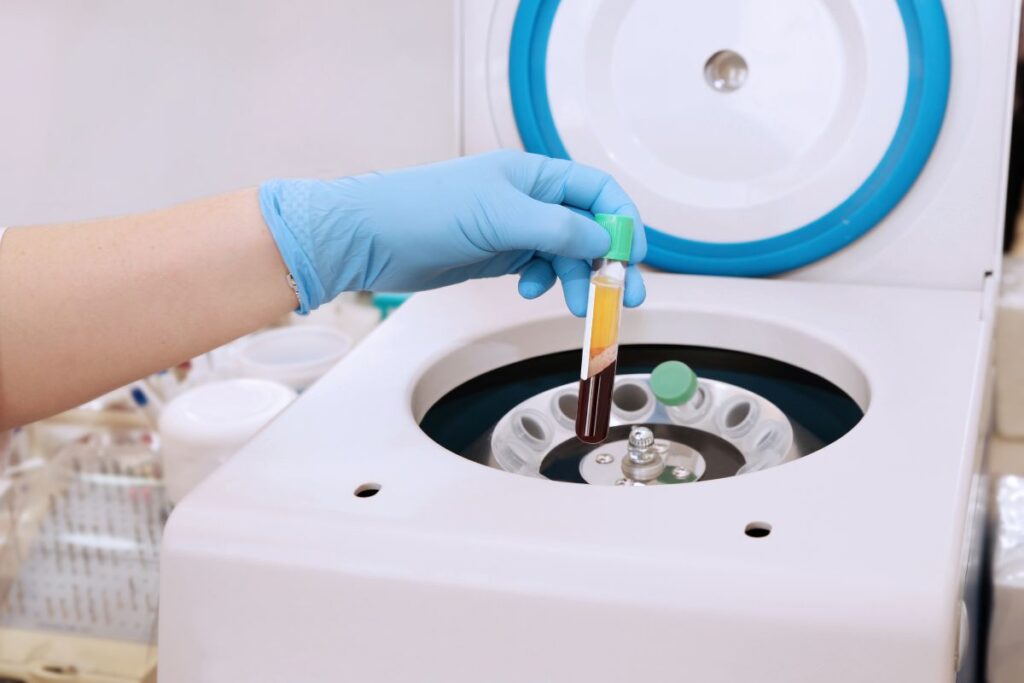
PRP is a concentrato di piastrine obtained from the patient's own blood, which contains a high quantity of growth factors. These factors are proteins capable to stimulate the healing and regeneration processes of tissues. In this way, the hip tissue damaged by osteoarthritis is able to heal and regenerate, while at the same time reducing the patient's painful symptoms and functional difficulties, starting with walking.
The procedure by which the therapy is carried out is simple and minimally invasive. A small amount of blood is drawn from the patient, which is then centrifuged to separate the platelet-rich plasma from the other components. The PRP concentrate is then injected under ultrasound guidance directly into the hip joint or the damaged surrounding tissue.
PRP injections for the hip aim to:
- Stimulate the tissue repair cartilaginous and capsular.
- Reduce inflammation and the pain.
- Improve nutrient delivery to tissues.
- Modulate the local immune response, enhancing tissue regeneration.
Clinical studies have shown promising results in alleviating the symptoms of hip osteoarthritis and improving joint function, especially in patients with mild or moderate osteoarthritis or in young and athletic patients.
The great advantage of PRP is its autologous nature, that is, the fact that the therapy is generated starting from the blood taken from the patient himself. This completely eliminates the risk of allergic reactions, contraindications or rejection.The beneficial effects of the treatment are observable within a few weeks.
The beneficial effects of the treatment are observable within a few weeks.
Another cutting-edge treatment in the field of Regenerative Medicine is infiltration based on mesenchymal cells. These cells, also known as mesenchymal stem cells, are multipotential cells, that is, they have the extraordinary ability to differentiate into different types of cells. Mesenchymal cells, therefore, can transform into:
- Chondrocytes, or the cells that form cartilage;
- Osteoblasts, bone cells;
- Adipocytes, fat cells useful for repairing damaged tissue.
In addition to their differentiation capacity, mesenchymal cells are optimal in the treatment of the early stages of hip osteoarthritis due to their paracrine effect: this means that they are able to secrete growth factors and bioactive molecules that stimulate the regeneration of surrounding tissues, reduce inflammation and modulate the immune response.
Mesenchymal cells play a role in the patient's immune response to the inflammatory process, reducing its intensity and therefore decreasing pain.
The main source from which mesenchymal cells are taken is the adipose tissue, or the patient's own fat. Once the mesenchymal cells have been obtained, they are infiltrated into the hip.
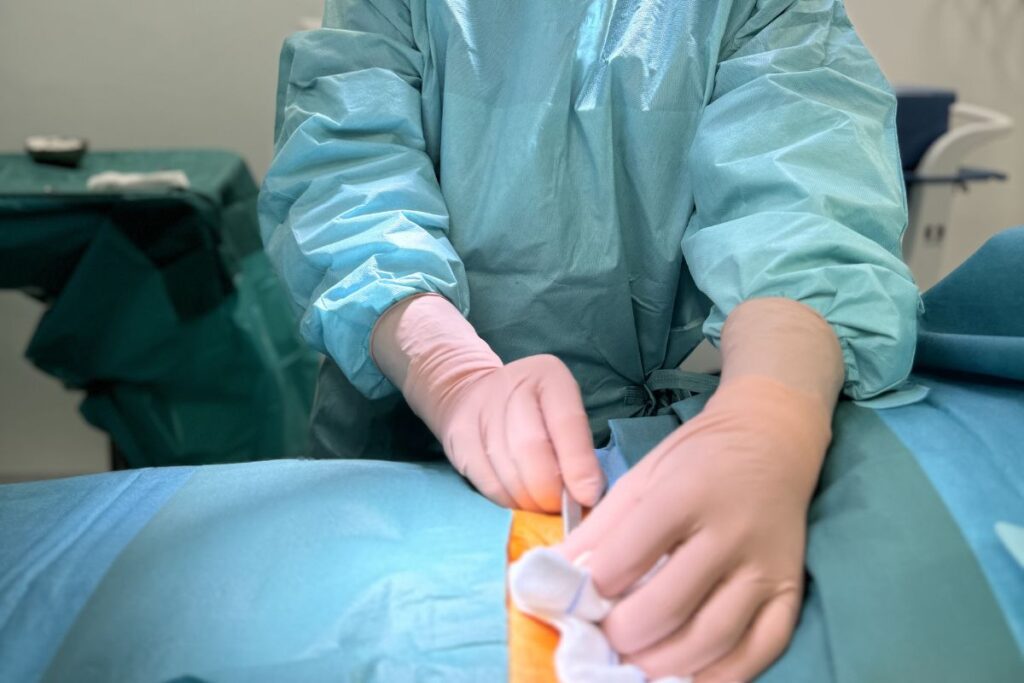
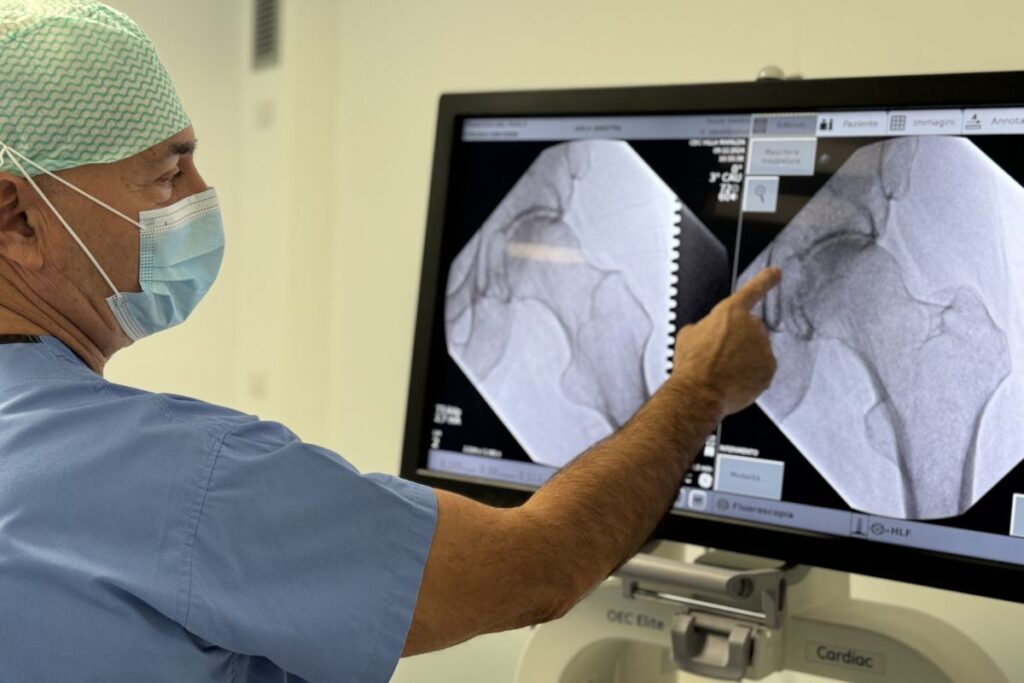
Dr. Riccardo Giacomi does not use an ultrasound-guided technique for the infiltration of mesenchymal cells into the hip, but radio-controlled. The infiltration needle is inserted into the joint capsule and air is pumped into the joint. This allows the articular crescent to be visualized, thus ensuring that the correct site for the infiltration is reached. At this point, the capsule is inflated with air and the mesenchymal cells are infiltrated in the best place to relieve the patient’s symptoms.. The infiltration needle is inserted into the joint capsule and air is pumped into the joint. This allows the articular crescent to be visualized, thus ensuring that the correct site for the infiltration is reached. At this point, the capsule is inflated with air and the mesenchymal cells are infiltrated in the best place to relieve the patient’s symptoms.
Research on mesenchymal cells for the hip is continuously evolving and the preliminary results are very encouraging, especially for patients with mild to moderate hip osteoarthritis.
Ozone therapy for hip arthritis
Among the most promising therapies for the management of pain and inflammation related to hip osteoarthritis is theozone therapy. This therapy exploits the potential of themedical ozone, a mixture of oxygen and ozone, which is injected directly into the hip joint.
The mechanism of action of ozone is mainly related to its anti-inflammatory, analgesic and oxygenating properties. Its benefits include:
- Anti-inflammatory effect: Ozone modulates the production of inflammatory mediators, reducing pain and swelling.
- Analgesic action: helps turn off pain receptors.
- Improved oxygenation: increases the supply of oxygen to tissues, promoting cellular metabolism and healing.
Ozone therapy is often considered an option for patients who cannot undergo surgery and who do not respond to other therapies. It is generally free from side effects and can also be used in patients who, in addition to hip osteoarthritis, have other pathologies.
Fighting Hip Arthrosis with Hyaluronic Acid
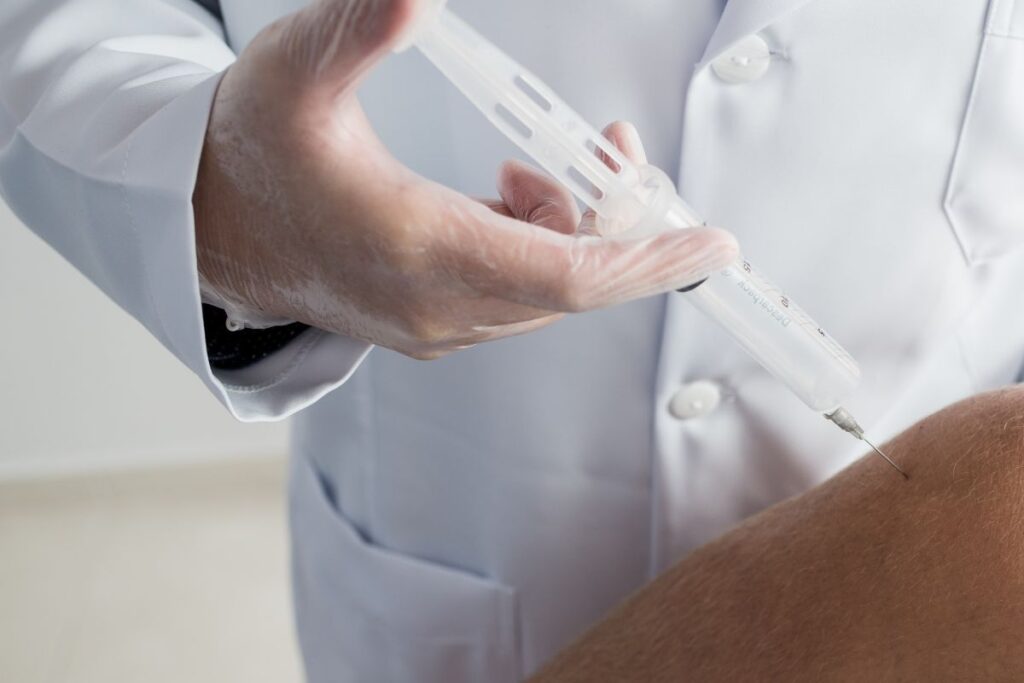
Among the conservative therapies for hip arthrosis we also find infiltrations of hyaluronic acid hyaluronic acid, also known as viscosupplementation. Hyaluronic acid is a substance naturally present in synovial fluid, the fluid that lubricates and nourishes articular cartilage, allowing joints to slide without friction.
At the site affected by arthrosis, the quantity and quality of hyaluronic acid decreases, leading to increased friction, pain and difficulty in movement.
Hyaluronic acid injections aim to:
- Lubricate the joint, restoring the visco-elasticity of the synovial fluid and reducing friction between the joint surfaces
- Absorb shocks, protecting cartilage from mechanical stress.
- Nourish the cartilage
- Reduce inflammation
Treatment consists of a series of injections, usually one per week for 3-5 weeks. This therapy can provide pain relief for several months, delaying the need for more invasive procedures.
Hip Arthrosis: When Surgery is Necessary
For some patients, regenerative therapies may be the ideal solution forFor some patients, regenerative therapies may be the ideal solution for postpone or even avoid surgery. For others, they can be used as part of a rehabilitation program.
Regenerative Medicine is a valuable ally in the treatment of hip osteoarthritis in the early and initial stages of the disease. Unfortunately, since it is a degenerative disease, At a certain point, the time may come when the patient will no longer respond to conservative or regenerative treatments and will require surgery surgical prosthetic replacement of the diseased joint. This procedure represents the only truly definitive solution to coxarthrosis.
Fortunately, today it is possible to do this minimally invasive hip replacement surgery, thanks to modern surgical techniques and in particular to access for front wayThis is the access to the joint favored by Dr. Giacomi, who has specialized in this surgical technique for over 15 years.
Thanks to the anterior incision it is possible to access the joint to be replaced without affecting any muscles. This allows for a minimal bleeding but above all it allows you to get back to walking without pain in a very short time. In fact, patients are back on their feet just 4 hours after the operation and after 24 hours I am able to walk independently with crutches.
Dr. Giacomi's surgical approach fits perfectly within the fast track protocol, a surgical and post-surgical protocol aimed precisely at minimizing recovery times, pain and the use of drugs for the patient.
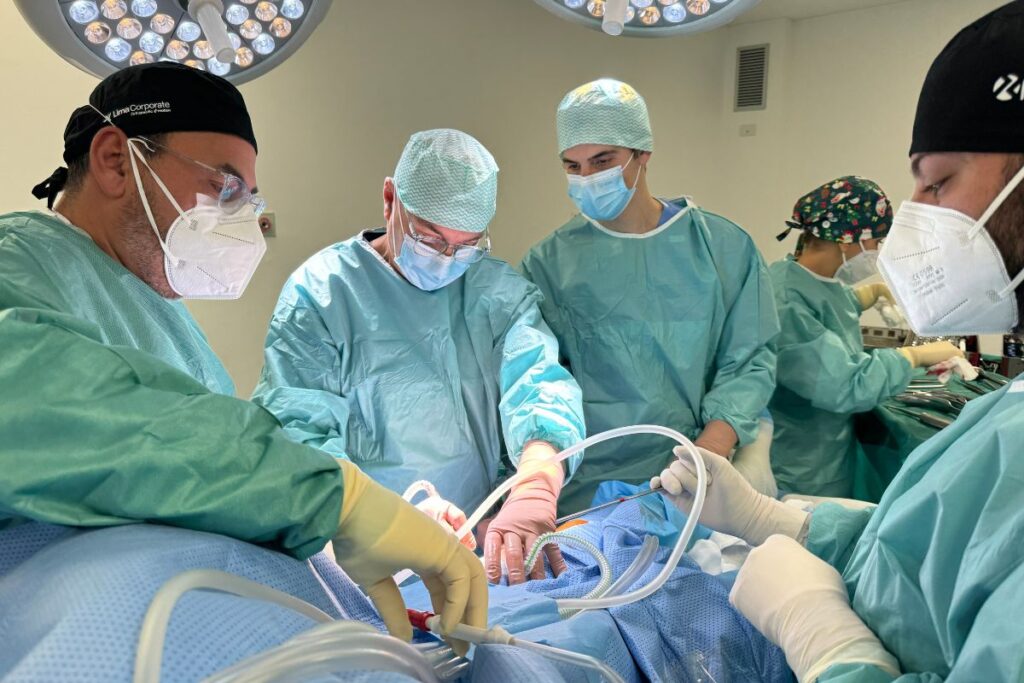
Dr. Riccardo Giacomi – Regenerative Medicine for the treatment of hip osteoarthritis in Rome
Il Dott. Riccardo Giacomi is an orthopedic surgeon with more than 30 years of experience. He performed more than 3500 hip replacement implants and specializes in hip replacement surgery and in particular in the minimally invasive technique that involves anterior access.
His experience and expertise make him one of the points of reference in Italy and Europe for anterior hip replacement surgery, but also for the different Regenerative Medicine techniquesthat today allow to delay the need for surgery. Every year it helps hundreds of patients to get back on their feet and permanently heal from hip osteoarthritis.
Going back to living without limits is possible. Trust the experience of Dr. Giacomi to understand if Regenerative Medicine can be the most suitable solution for your case.